The Breton seaweed industry is positioning itself as a real driver of the blue economy and innovation. With the European Biochains Atlantic project (launched in October 2025), led in Brittany by Biotech Santé Bretagne, local players will benefit from unique support to promote their resources, strengthen their competitiveness and develop new collaborations across the Atlantic. From mapping stakeholders to value chain models, including a smart digital tool and networking events, this project offers Breton companies all the levers they need to innovate and expand into the European food and cosmetics markets.
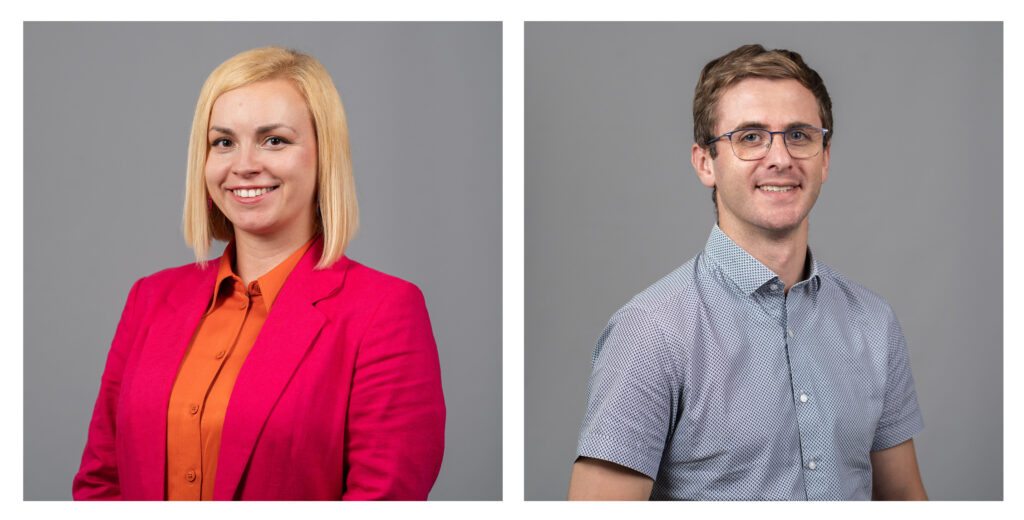
Meeting with the two project leaders at Biotech Santé Bretagne: Gorenka Bojadzija Savic, Head of Development and European Projects – Biotech Innovation, and Stéphane Tarrade, Head of Biomass Conversion Projects.
How did the idea for such a project based on algal biomass come about?
Stéphane Tarrade:
In recent years, interest in biomass has grown significantly. It is seen as a key resource for meeting the major challenges of ecological and societal transition. It is increasingly discussed in studies, reports and regional plans, which highlight potential sources and uses. However, in practice, things are often more complicated: it is not always easy to identify available resources, stabilise biomass, manage seasonality, storage or logistics.
In Brittany, the subject is particularly important because the region has an attractive asset: algal biomass, which is very abundant on our coastlines.
In 2021, macroalgae activity in Brittany (especially in Finistère and Côtes-d’Armor) represented more than 70,000 tonnes of seaweed harvested, mainly at sea. A small proportion comes from the shores, and an even smaller fraction from seaweed farming.
These seaweeds are varied: there are many brown seaweeds such as kelp, used in the food and cosmetics industries to produce alginates (food additives E400 to E405). But there are also green seaweeds such as sea lettuce, and red seaweeds such as dulse and nori.
In 2019, the sector, from harvesting to processing, already accounted for nearly 880 jobs and around €125 million in turnover in the Pays de Brest region alone.
In addition to macroalgae, there has also been growth in the production of microalgae such as chlorella and spirulina, as well as other species that can be used to obtain high value-added molecules useful in various sectors.
It is for all these reasons that BSB has chosen to participate in this European project with the aim of comparing the models developed on the Atlantic coast and contributing to the sustainability of the algae biomass industry.
What will be the concrete benefits for regional stakeholders? Which stakeholders in the seaweed sector will be involved?
Gorenka Bojadzija Savic:
The BIOCHAINS Atlantic project will bring very concrete benefits to stakeholders in the seaweed sector in Brittany.
Mapping stakeholders in the Atlantic region
One of the main outcomes of the project will be the creation of a comprehensive interactive map of stakeholders in the seaweed value chain in the Atlantic region (Spain, Portugal, France and Ireland). For stakeholders in Brittany, this will be more than just a database: the map will highlight their expertise, capabilities and innovations within the European seaweed ecosystem. It will also be a practical tool for connecting with partners and identifying new opportunities. For example, a Breton SME wishing to enter the Irish cosmetics market will be able to use the map to directly identify processing partners or distributors.
Themed days and networking events
As part of the project, Biotech Santé Bretagne will organise themed days and networking events, bringing together stakeholders from across the algae biomass value chain (with a particular focus on food and cosmetics). These meetings will enable Breton stakeholders to gain visibility, create opportunities for collaboration and identify synergies with other stakeholders.
Value chain models and knowledge capitalisation
Another major outcome will be the development of algal biomass value chain models — roadmaps to help stakeholders navigate each stage, from bioresources to end products in markets such as food and cosmetics.
The Biochains Atlantic project will also centralise and harmonise knowledge that is currently scattered across numerous European projects. This will prevent Breton stakeholders from “reinventing the wheel” and enable them to build on what already exists. For example, a small cosmetics company will be able to quickly identify the suppliers, technologies and compliance procedures that are right for its needs.
These models will be presented in a clear and visual manner (e.g. in the form of modular diagrams) and will include:
- best practices, tools, technologies and the latest scientific research, tailored to the needs of stakeholders at each stage of the value chain;
- the main stakeholders in the Atlantic chain;
- regulatory recommendations for navigating the complex standards of the Atlantic region.
Thanks to the Biochains Atlantic project, stakeholders in Brittany will have a single point of access to the latest information: stakeholders, tools, knowledge, technologies and regulatory requirements.
Personalised support
The project will not be limited to generic resources: partners will adapt models to offer personalised support to stakeholders throughout the project, until its completion.
A digital tool generating personalised roadmaps
To ensure continuity beyond the duration of the project, Biochains Atlantic will develop an intelligent digital decision-making tool. Based on value chain models and the information collected, it will generate personalised roadmaps for stakeholders and will remain freely accessible on the project website and those of its partners.
Other deliverables on markets, profitability, life cycle or regulations
Breton stakeholders will also benefit from:
- a report on market and consumer trends (preferences, sustainability practices, competitive strategies),
- technical and economic analysis (TEA) reports on profitability,
- life cycle assessment (LCA) reports on environmental impact,
- concrete regulatory recommendations to ensure compliance in the food and cosmetics sectors.
In summary, the project will enable Breton stakeholders not only to improve their internal competitiveness, but also to find the right international partners in the Atlantic and access the latest knowledge, tools and regulations. This combination of visibility, collaboration and access to innovation will directly support the development of the seaweed industry in Brittany.
What role does Biotech Santé Bretagne play in the project?
In Biochains Atlantic, BSB leads WP2 (development of value chain models and digital tools), coordinates stakeholder mapping at regional level, contributes to regulatory analysis, organises thematic days and networking events, and helps to coordinate the network of local players in the seaweed sector. BSB will highlight Breton stakeholders within the Atlantic network, convey their specific needs and help transform shared tools into real local impacts.
(Translated with DeepL.com)
Would you like to find out more? Contact:
- Gorenka Bojadzija Savic, European Development and Projects Manager – Biotech Innovation: gorenka@biotech-sante-bretagne.fr
- Stéphane Tarrade, Biomass Conversion Project Manager: stephane@biotech-sante-bretagne.fr
Published on 20/01/2026